ISBN: 9780986992605 | Published: July 1, 2017 |
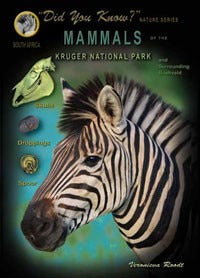
Mammals of the Kruger National Park
Mammals of the Kruger National Park
Estimated Shipping Widget will be displayed here!
Couldn't load pickup availability
The aim of this book is to provide a handy, easy- to-use guidebook for tour guides, tourists and students. My goal was to keep the book as 'travel friendly' as possible, ideal for game walks and an easy size to carry in a suitcase. A small pocket- sized book limits the amount of information and the size of the photographs, so a compromise was reached by limiting the number of pages to one page per animal.
There is at least one photograph of each animal, but often two (male and female). Photographs of the droppings and skull and a sketch of the spoor is provided for each animal. The droppings were photographed with a match for scale and the spoor is provided with measurements. The skulls were photographed at the Ditsong National Museum for Natural History, Pretoria. There is a brief explanation of the different skull components on pg 5 and 6.
Distribution maps for the Southern African sub-region accompany each animal. This will make the book useful in other areas as well.
The common names are provided in English, Afrikaans, German, French, Spanish and Italian with only a few exceptions. The basic information on weight, gestation, habitat, food, social structure, etc., is provided in a separate block for each animal. The dental formula is also included and the formula is explained on pg 5.
The 'Did you know?' section contains additional interesting facts about the animal.
The book is colour-coded for quick reference and the colour codes are indicated in the contents for cross reference. The book is divided into six major groups - the non-ruminants, the ruminants, the carnivores, the non-carnivorous small mammals, the rodents and shrews and lastly, the bats.
At the beginning of each section there is information about the group and a visual diagram of the orders, suborders, families and sub-families within the group.
Author Veronica Roodt
Share